

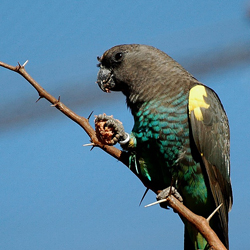


Why Does My Bird Chew Things Up?
|
The drive to chew can create some problems if we don't give them suitable objects like destructible toys to chew. Otherwise, our parrots will gladly find their own chewable items within our homes like furniture, doors, baseboards and moulding. Many an antique, doorframe, window sill and favorite chair have fallen prey to the almighty beak. Unsupervised exploratory chewing also poses extreme dangers to our birds if they decide to chew on toxic plants, through live electrical cords, etc. Although you can't halt a bird's drive to chew, this instinct can be re-channeled towards more appropriate objects such as:
A few other great benefits of chewing is that it provides a release for excess energy and alleviates boredom. Providing acceptable chewing outlets will be of great benefit to your bird's physical and emotional health as well as to your own peace of mind. |
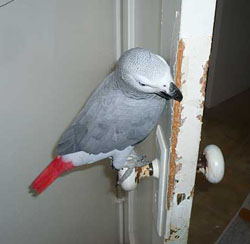 Chewing is a natural, instinctual behavior for parrots where they use the "power of the beak" to chew nesting holes in trees. Chewing is one of nature's way of keeping a parrot's beak fit and trim. Providing opportunities for your parrot to chew is very important considering all of the activities a parrot must accomplish using its beak (eating, climbing, preening, defense, nest building and more).
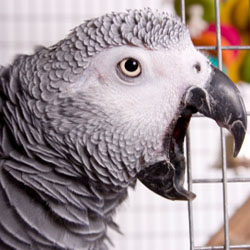 Birds use a wide variety of vocalizations to communicate with their
 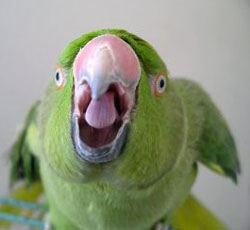 Birds use their beaks for a wide variety of tasks, including eating, climbing, exploring and nest excavation. Parrots rarely bite in the wild and when they do it is for defensive reasons. A parrot's first instinct is to flee danger but when they feel cornered or threatened they will bite.